

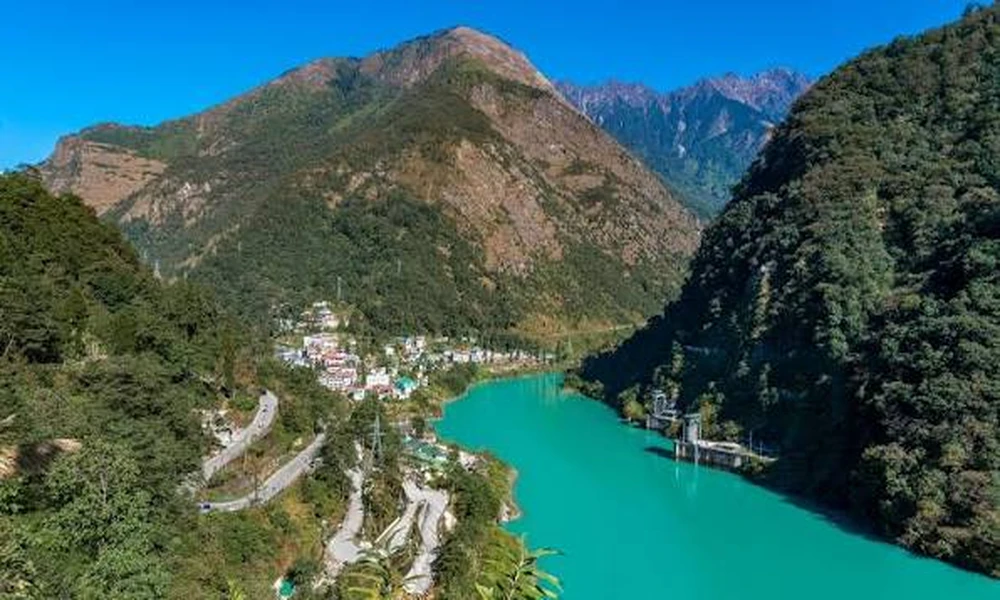
Chungthang in Sikkim is a small confluence town in Mangan district, about 95 km north of Gangtok, where the Lachen and Lachung rivers meet to form the Teesta. Most people rush through it on the way to Yumthang or Gurudongmar. Slow down, because the sacred rock, the miracle paddy field and quiet Lepcha life reward a proper halt.
Where is Chungthang, and why stop here?
Chungthang sits at around 1,790 m (about 5,800 ft) in North Sikkim’s Mangan district, roughly 95 to 100 km from Gangtok. It is the point where the road forks: left to Lachen, Chopta Valley and Gurudongmar Lake, right to Lachung and Yumthang. Almost every North Sikkim itinerary passes through it, yet few give it more than a tea break. That is the mistake we want you to avoid.
What is the sacred rock (Lhedo or Neydo)?
The sacred rock, known locally as Lhedo or Neydo, is a large boulder said to carry the imprint of Guru Padmasambhava, the 8th-century master who brought Buddhism across the Himalaya. Local belief holds that the Guru meditated here and blessed the ground. A thin trickle of mineral water still seeps from a small opening in the rock, and it runs all year, even in deep winter. Pilgrims collect it and treat it as holy. You do not need to be Buddhist to feel why people lower their voices around it.
Why do paddy fields grow here in the cold?
Around the rock, a small paddy field grows season after season, which surprises everyone the first time. Chungthang’s altitude and cold really should not suit rice at all. The local story says Guru Padmasambhava scattered a handful of leftover rice on the ground, and paddy has grown there ever since. Whether you read it as faith or as a quirk of the microclimate, that green patch against the bare mountains is a genuinely odd, lovely sight.
What is the culture and history of Chungthang?
Chungthang is Lepcha and Bhutia heartland, and the Lepcha, Sikkim’s earliest inhabitants, treat this whole valley as sacred. History layers up here in an unusual way. Alongside the Buddhist Guru Rinpoche story sits the Gurudwara Nanak Lama, linked to Guru Nanak Dev, who is believed to have passed through on his Himalayan travels. It is rare to find one small town holding both a Padmasambhava legend and a Guru Nanak one. For years the town was known outside Sikkim mostly for the Teesta hydro project rather than its own quiet character.
Where can you eat in Chungthang?
Eating in Chungthang is simple, hot and cheap. Small roadside kitchens and homestay dining rooms serve the food that keeps drivers and locals going: steaming thukpa, plates of momo (not momos!), gya thuk noodle soup, and daal-bhaat with local vegetables. Order a butter tea or a plain sweet chai and warm your hands on the glass. Do not expect menus or fancy cafes. Do expect a hot meal cooked by the family running the place, which is usually better than anything polished.
How do you reach Chungthang?
You reach Chungthang by road from Gangtok, and there is no shortcut.
- By air: Nearest airports are Pakyong (about 125 km) and Bagdogra in West Bengal (about 200 km). From either, hire a cab to Gangtok first.
- By train: New Jalpaiguri (NJP) is the closest railhead, roughly 190 km away, with cabs onward to Gangtok.
- By road: From Gangtok it is about 5 to 6 hours to Chungthang, depending on weather, roadwork and landslides.
Permits: You need an Inner Line Permit (ILP) if you are an Indian traveller, and a Protected Area Permit (PAP) if you are a foreign national. These are arranged through registered Sikkim operators, not at a random counter, so sort the paperwork before you leave Gangtok.
When is the best time to visit Chungthang?
The best time to visit Chungthang is March to June and October to early December. Spring brings rhododendron colour on the higher slopes and fresh greenery. Late autumn gives you clean air and steadier roads. Avoid the peak monsoon, roughly late June to September, when landslides regularly block the Chungthang to Lachung and Chungthang to Lachen roads. Winter is cold and can bring snow that shuts the higher stretches.
Where should you stay near Chungthang?
Stay in Lachen or Lachung, not in Chungthang itself. This is the honest bit. Chungthang has only basic guesthouses and roadside rooms, and most operators treat it as a lunch or photo halt, not a night stop. Drive another 1 to 2 hours up to Lachung (for Yumthang) or Lachen (for Gurudongmar), where warm homestays with hot food and thick quilts are easy to find. If you are set on sleeping in Chungthang, keep expectations low and carry a power bank.
Is Chungthang open after the 2023 flood?
Yes, but conditions change fast, so check before you commit. In October 2023 a glacial lake outburst flood tore down the Teesta Stage III dam at Chungthang and washed away bridges and long stretches of road, and repairs are still ongoing. As of 2026, tourists do travel through Chungthang to Lachen and Lachung, but the roads here stay fragile and landslides can close them at short notice, as they did in April 2025 when over 1,000 stranded tourists had to be evacuated. Always confirm the current road status with a local operator a day or two before you go.
What does an offbeat traveller gain here?
What you gain is the pause. Chungthang is where you feel two rivers actually meet, where a legend sits on a real rock you can walk up to, and where nobody is trying to sell you a viewpoint. For offbeat travellers tired of crowded photo spots, half an hour here, camera or notebook in hand, is worth more than another rushed selfie further up the valley.
Plan your Chungthang trip
For a place like Chungthang, local knowledge is the whole game. A local tour operator will track which roads are open, which permits you need this season, which homestays up in Lachen and Lachung are actually taking guests, and when the passes are likely to close. You get on-ground, current answers from people who drive these roads. That is the difference between a smooth North Sikkim trip and a stranded afternoon.
FAQ
Is Chungthang worth visiting?
Yes, as a meaningful halt on your North Sikkim trip. The sacred rock, paddy field and river confluence make a 30 to 45 minute stop worthwhile, though it is not usually an overnight base.
Do I need a permit for Chungthang?
Yes. Indian travellers need an Inner Line Permit and foreign nationals need a Protected Area Permit, arranged through a registered Sikkim operator.
How far is Chungthang from Gangtok?
Around 95 to 100 km, about 5 to 6 hours by road depending on conditions.
Can I stay overnight in Chungthang?
You can, but options are basic. Most travellers sleep in Lachen or Lachung instead.
What is the sacred rock in Chungthang?
It is Lhedo or Neydo, a rock believed to carry Guru Padmasambhava’s imprint, with a small mineral water spring that flows all year.
Is the road to Chungthang safe after the 2023 flood?
It is open but fragile. Roads can close after rain or landslides, so check the current status before travelling (as of August 2026).
Plan your trip
Planning a North Sikkim trip and want Chungthang done right, with current road news, permits and stays sorted? Explore more and plan with the local team at https://sikkimtourism.org/